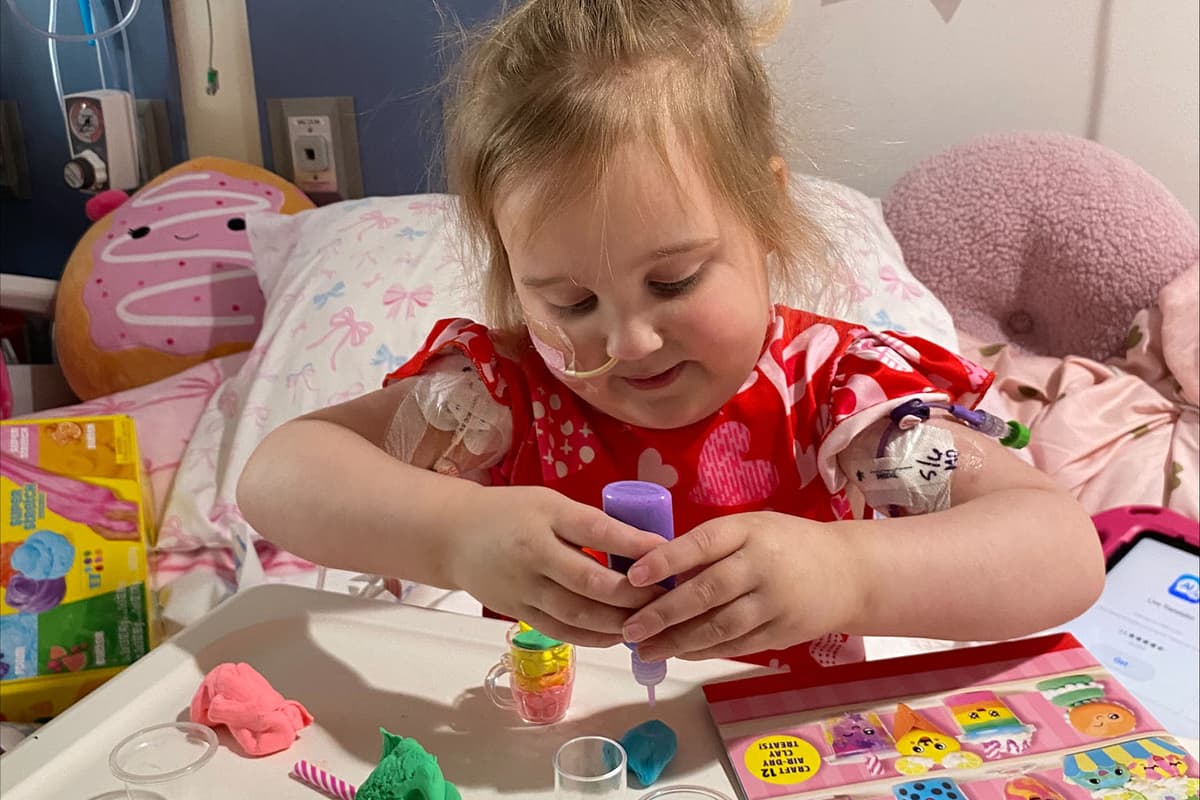
Play, An Essential Coping Strategy for Hospitalized Children
 Resources for Parents
 Resources for Parents
Play is important because it promotes the health and wellbeing of children. It's also one of the main way kids make sense of what’s happening around them.
Child life specialists Carson and Alexandrea, both child development experts, discuss the benefits of play for kids, especially those in the hospital.
Alexandrea puts it simply:

“Play isn’t just play. Play is the job and work of a child. It’s how they learn how the world works around them.”
Play is one tool kids can use to cope with challenging emotions or experiences.
In the hospital, a child might play during a difficult procedure to help get through it, which helps them develop positive coping strategies they can use later in life.
"If a four-year-old or a 14-year-old is learning coping skills while getting an IV, it can set kids up for later in life, such as when they start college, are learning how to study, or have a difficult talk coming up. It’s building the framework for how to deal with later difficulties in life and have positive coping strategies." - Carson
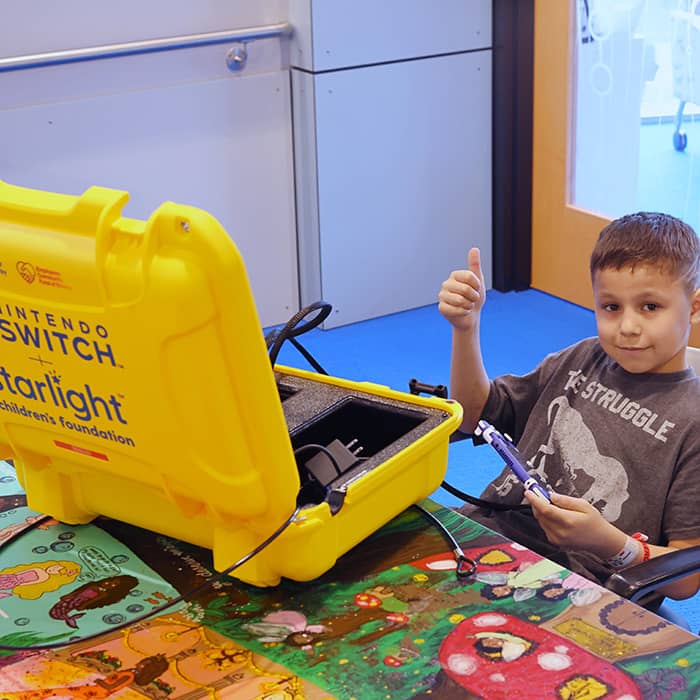
Image: Camden finds happiness and joy playing with Starlight Gaming, helping him cope with his burn injury and hospital stay.
In an environment like the hospital where kids may not have many choices, child-directed play empowers them with a sense of autonomy and control.
Carson highlights why giving hospitalized kids a sense of control is empowering:
“Their control is being taken away in the hospital -- they're told when they are taking medicine, when the doctor is coming in, when they are going to have an IV. So, play is a way to let the kids be in control, make their own decisions, process their emotions on their own time, without someone telling them that they need to do something in a certain order.”
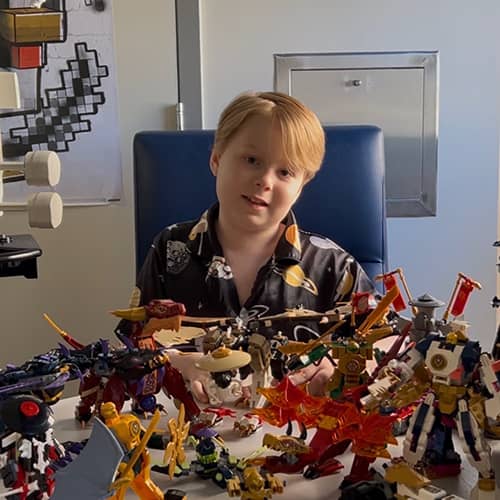
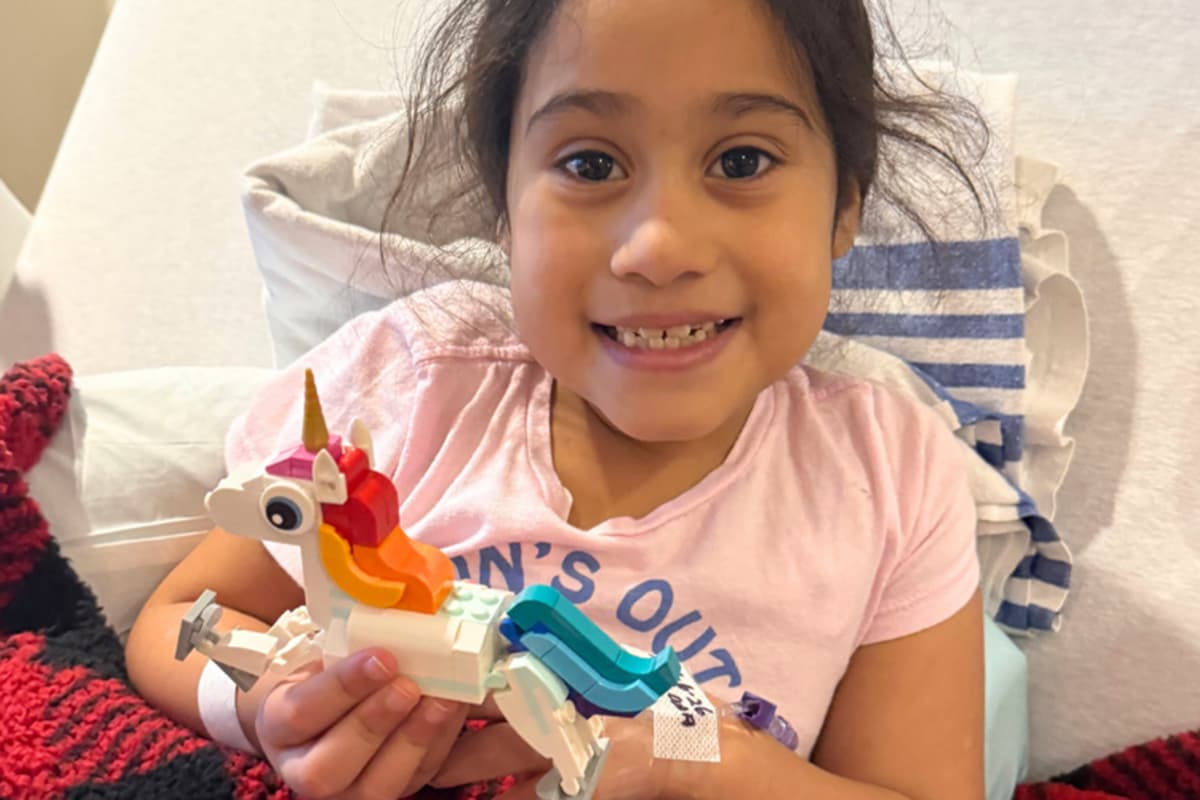
Image: Creative play with LEGO sets in the hospital lets Jameson decide what to build.
When kids are in a new place with unfamiliar places, they may feel stressed and anxious. The hospital can feel especially overwhelming.
When kids play with hospital staff, it makes it easier to connect and build trust. For Alexandrea and Carson, that connection might start with hopping on a Starlight Gaming Station to play video games together or building a LEGO® set from the Starlight Toy Deliveries program together.
Check out Alexandrea using LEGO and arts and crafts to play with pediatric patients:
When a child feels lonely or isolated at the hospital, playing with others is a way to feel connected.
“Starlight items allow socialization to happen. A child might already feel isolated at the hospital, but when they can go to the playroom and see the Starlight Toys like LEGO bricks, Barbies and Starlight Hospital Gowns, and see other kids playing with it, then they can play together. It makes the hospital more fun.” - Carson
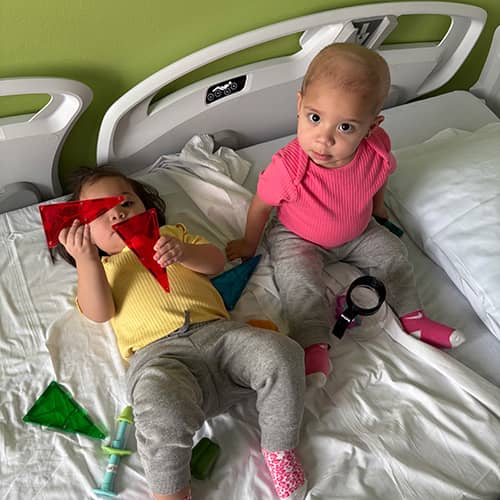
Image: Arcelia and her sister playing together with a toy at the hospital.
Play can redirect a child’s attention away from pain and worry toward fun and happiness instead. In this way, it can be a powerful tool for hospitalized kids like Sophia when going through treatments like chemotherapy.
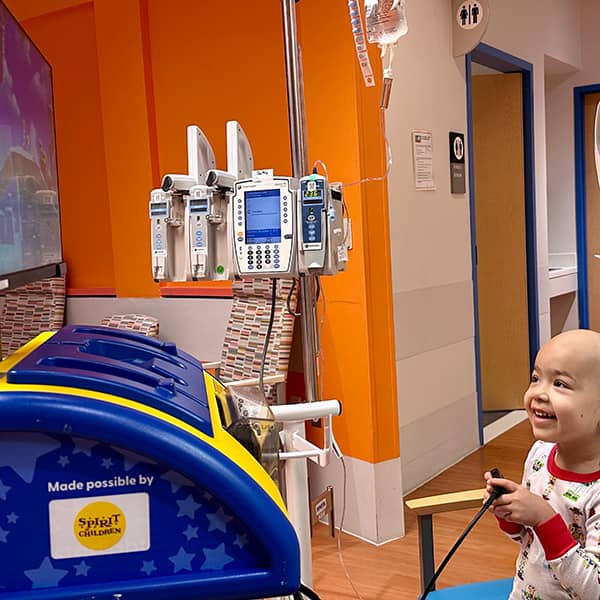
Image: Sophia being distracted from her chemotherapy while playing video games on the Starlight Gaming Station.

- Caron Barnes, CCLS“Play can be a distraction, which allows kids to focus on something else instead of the main reason why they’re at the hospital.”
Familiar play can remind kids of home, even in a place that doesn’t feel like it.
Especially at the hospital, there are many new and unfamiliar experiences happening to kids. It can be overwhelming. Getting to play with something familiar can help a child feel grounding sense of security.
“Play makes kids happy. They might think, ‘I feel safe because this is something I have at home or I have at school, just in a different setting.’” - Alexandrea
Carson and Alexandrea especially love the popular toys they get through the Starlight Toy Delivery program because many kids have played with them at home.
“Starlight has all familiar toys ... Kids have played with these toys, they’ve gotten them for birthdays, Christmases, they’ve seen them on the Walmart shelf.” - Carson
“If you’ve been playing with Play-Doh at home for the last two days, and you get to play with Play-Doh at the hospital, it makes the transition a bit easier,” Carson shares.
Creative, open-ended play, can help kids develop their problem solving and critical thinking skills. Playing with free building toys like LEGO sets or magnetic tiles challenges kids to create different structures and designs.
Other toys like Play-Doh can allow kids to form and shape whatever they can imagine. Open-ended play can also comfort kids in the hospital by reminding them of their home life.
“If you’ve been playing with Play-Doh at home for the last two days, and you get to play with Play-Doh at the hospital, it makes the transition a bit easier,” Carson shares. Carson and Alexandrea give kids toys like these from the Starlight Toy Delivery program.
Want more ideas? Discover Alexandrea and Carson’s top 5 open-ended toy recommendations here.
Medical play is another form of open-ended play. When it comes to the hospital and understanding how procedures and tests work, kids can use play to process and express their emotions.
Carson and Alexandrea might engage in medical play with a child, where they might use a toy like a baby doll or a LEGO MRI Scanner that they received through Starlight to prepare a child for medical tests and procedures or help them process it. Kids can pretend-play, act things out and freely explore.
Carson explains why this type of play is beneficial for kids in the hospital:
“With a baby doll, for example, it can turn into medical play of what they have experienced in the hospital and what’s happened to them along their stay, such as a lab draw. It gives kids a chance to process, explore their emotions of how they felt during it, and reflect on their experience.”
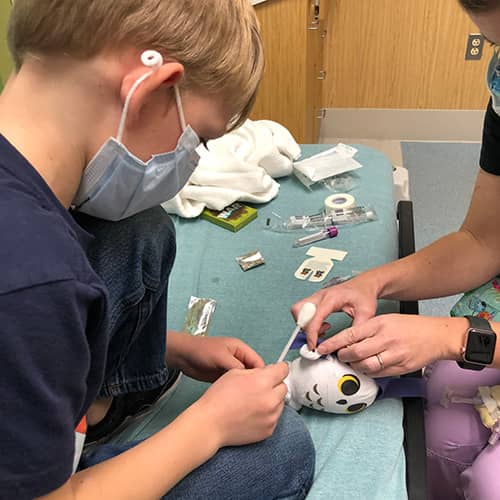
Image: Henry engaging in medical play with a stuffed animal toy.
Play is one of the main ways they learn, cope and make sense of the world. You may have seen yourself how your child might learn a new skill, feel happy or connect with friends when they play.
Kids in the hospital need the same play to keep growing. While hospitalized kids may not be able to play outside or run around, you can supply them with resources to let them play. Child life specialists rely on donor support for resources like Starlight programs to help kids play. Families are never billed for the critical resource.
Your donation allows kids at the hospital to play, even when they can’t leave their hospital bed.
Get insights on medical play, creative toys, and pediatric guidance from Child Life Specialists.
Resources for Parents Resources for Parents
 Resources for Parents
 Resources for Parents
 Resources for Parents
 Resources for Parents